Anii trec ca norii, perii-ncărunţesc,
vremurile-s altfel, totul e-n schimbare,
zilnic se preface tot ce-i pământesc
— numai Adevărul este-acelaşi soare.
Iarba se usucă, frunza cade iar
apa-şi face vaduri, altele într-una,
peste toate-n lume plânge-un “în zadar”
— numai în iubire cânt-un “totdeauna”.
Vara arzi în soare, iarna arzi în ger
ce te-ncântă astăzi, mâine ţi-e povară,
toate-apasă duhul, toate-l strâng ca-n fier
— numai conştiinţa sfântă e uşoară.
Toţi sunt ca şi tine: slabi şi schimbători
cei aproape astăzi, ţi-s departe mâne
oamenii, ca anii-s aburi trecători
— numai Domnul singur neschimbat rămâne.
…Nu-ţi lega de nimeni inima acum
ca să nu ţi-o smulgă ruperea ce vine,
leagă-ţi-o de Domnul — lumea-i vis şi fum
singur El rămâne veşnic lângă tine.
Cauți să susții unitatea sau te bucuri unde se nimerește?
Iosua 22.21-34
Fiii lui Ruben, Gad şi Manase îşi explică intenţiile, iar sinceritatea lor este recunoscută de fraţii lor. La ce servea acest altar impunător? Nu exista lângă Iordan un monument mult mai reprezentativ, mormanul de douăsprezece pietre, simbol al unităţii poporului în poziţia sa cerească (Iosua 4)? Dar, cu siguranţă, aceste două seminţii şi jumătate îşi pierduseră (ca atât de mulţi creştini) plinătatea bucuriei pentru privilegiile lor.
The WordPress.com stats helper monkeys prepared a 2014 annual report for this blog.
Here’s an excerpt:
The concert hall at the Sydney Opera House holds 2,700 people. This blog was viewed about 20,000 times in 2014. If it were a concert at Sydney Opera House, it would take about 7 sold-out performances for that many people to see it.
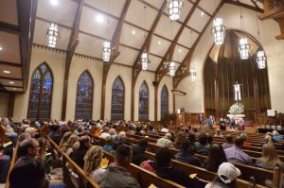
De multe ori bisericile noastre sunt pline doar pe jumătate sau unele dintre ele aproape goale. Nu doar tinerii, dar și adulții lipsesc de la programe, de la seara de rugăciune, iar uneori evită a lua parte la Cina Domnului. Unele biserici au puțini membri duminica dimineața (poate e prea de dimineață pentru cei care seara nu se retrag la timp pentru a se pregăti pentru ziua de odihnă …), altele seara. În timp ce unele biserici seara nu mai au program! Unii nu au adunare în seara de 31 decembrie, alții în dimineața de 1 ianuarie!
. In December, 2008 National Geographic magazine, there was an interesting story called “The Real King Herod, Architect of the Holy Land”. However, what caught my attention was not the well documented discussions of his construction projects.
The author noted that King Herod is perhaps best known for ordering the slaughter of male infants in an attempt to kill the newborn Jesus Christ. The author went on to claim that, “Herod is almost certainly innocent of this crime, of which there is no report apart” from what is recorded in the Bible’s book of Mathew.
Au existat vreodată cuvinte mai mari ca acestea? Au fost vreodată scrise cuvinte mai paradoxale ca acestea? Există ceva mai neașteptat ca această declarație, aparent lipsită de sens, a lui Dumnezeu?
„Au venit nişte magi… la Ierusalim, şi au întrebat: „Unde este Împăratul de curând născut al Iudeilor?”
Matei 2:1-2
OAMENII ÎNŢELEPŢI ÎNCĂ ÎL CAUTĂ (1)
(Aceste meditaţii pornesc de la jocul de cuvinte ce derivă din sintagma englezească wise men, care semnifică ad litteram oameni înţelepţi sau învăţaţi, dar şi, magi, regi care au venit din orient la Betleem să se închine lui Isus Hristos, la naşterea Sa – cf. Dex)
De ce ar vrea cineva să-şi părăsească confortul casei sale, să călătorească trei mii două sute de kilometri pe cămilă, să sufere cu stoicism arsurile deşertului plin de hoţi şi de pericole şi să urmeze o stea spre o destinaţie necunoscută?
Acest colind este ultimul publicat din seria care a inceput pe 01 decembrie 2014. Colindele nu au fost alese dupa un criteriu anume. Unele dintre ele mi-au fost recomandate. Altele mi-au placut in mod deosebit. Altele sunt colinde compuse de prieteni. Toate insa au in componenta lor mesajul care trebuie sa se regaseasca intr-un colind care se vrea aducator de “VESTE BUNA”.
Mai jos am atasat playlist-ul cu toate colindele care au fost publicate pe Suceava Evanghelica in perioada 1 – 25 decembrie 2014
by Grace MacMullen
Used by permission only. Do not reproduce.
One of my favorite Christmas stories is about the sweet singer Ira D. Sankey, who led the music for so many D.L. Moody’s campaigns, and who wrote many beautiful songs including the classic gospel solo, “The Ninety and Nine.”
The year was 1876, and Sankey was traveling on a steamboat up the Delaware River on Christmas Eve. Travelers on such a holiday, seemingly cut adrift in a world where everyone else is celebrating with loved ones, often seem to cling together making a circle of warmth in a waiting room, in a plane, or in an almost deserted restaurant.
It was such a journey. On the deck were gathered a number of passengers, looking out at the calm, starlit night. Someone said, “Mr. Sankey is aboard!” and immediately there were cries of “Let him sing for us! Let’s ask Mr. Sankey to sing!”
He stood leaning against one of the great funnels of the boat. Before he began, he stood for a moment as if in prayer, deciding what to sing. He wanted to sing a Christmas song, but somehow the words of the Shepherd Song were what came to his heart.
“Saviour, like a shepherd lead us,
Much we need thy tender care.
In thy pleasant pastures feed us,
For our use thy folds prepare.”
Among the listeners, there was a deep stillness. The words telling the sweet story of God’s love for wandering men, and the beautiful melody floated out across the deck, across the water, into the night. Every heart was stirred.
At the end of the song, there was an almost audible response. One man stepped forth — a rough-looking man.
To Sankey, he said, “Did you ever serve in the Union Army?”
“Yes,” answered Sankey. “In the spring of 1860.”
“Can you remember if you were doing picket duty on a bright moonlight night in 1862?”
“Yes, I do,” answered Sankey, with surprise. “Were you…?”
“I did, too, but I was serving in the Confederate Army. When I saw you standing at your post, I said to myself, ‘That fellow will never get away from here alive.’ I raised my musket and took aim. I was in the shadow, completely hidden, while you walked in full moonlight.
“At that instant, you began to sing — just as a moment ago. The song was ‘Saviour, like a shepherd lead us…’
“The music reached my heart. I took my finger off the trigger. ‘I’ll wait until the end of the song,’ I said to myself. ‘I can’t miss him, and I can shoot him afterwards.’
“As you sang, you reached the place where it says,
“‘We are Thine, do Thou befriend us,’
“‘Be the guardian of our way…’
“I could hear every word perfectly, and how the memories came to my heart! I began to think of my childhood and my mother. She loved God. She had sung that song to me many times. But she died all too soon, otherwise I think my life might have been different.
“At the end of the song, I could not raise my musket again. It was impossible for me to take aim, though you still stood in the bright moonlight, a perfect target.
“Then I thought of the Lord. I looked at you and thought, ‘The Lord who was able to save that man from certain death must surely be great and mighty.’ My arm dropped to my side and I cannot tell you all the things I thought at that time. My heart was smitten, but I didn’t know what to do.
“Just now, when you were about to sing and stood quietly as if praying, I recognized you. I’ve wandered far and wide, since that other occasion. I have never found that Shepherd. Please help me now find a cure for my sick soul.”
Deeply moved, Mr. Sankey threw his arms about the man who had been his enemy, who, indeed, could have ended his life. That Christmas Eve night, a former soldier found the great and tender Shepherd as his Saviour.

 *
*



 ,,Încingeți-vă coapsele minții …“

 ANA TATAR ANDRAS